Native Palms That Hold Up on Commercial Sites
Sabal palmetto, royal palms, and a few underused natives that tolerate irrigation limits, wind loads, and heavy foot traffic without constant care.
By Natural Designs Team
Start with what the site can actually support
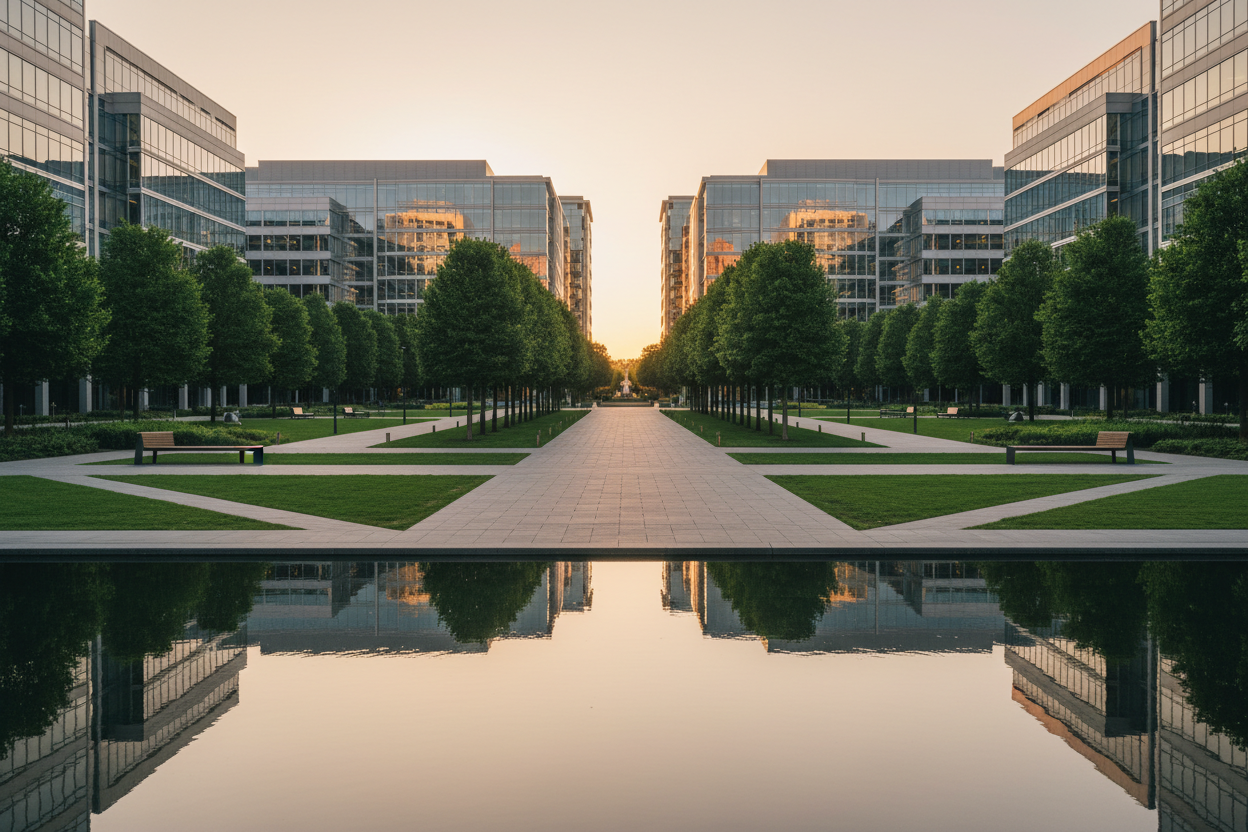
Every campus has a different set of constraints: reflected heat off a parking deck, salt exposure, reclaimed water chemistry, and a footprint that has to read well from the road at 35 miles per hour. The palm you plant should be chosen for those conditions first, and for the render second.
The dependable three
- Sabal palmetto — the state tree for good reason. Wind tolerant, native, and forgiving of poor soil.
- Roystonea regia — royal palms give vertical hierarchy to an entrance drive, but they want consistent moisture and room for a large canopy.
- Serenoa repens — saw palmetto as a mass planting handles full sun and drought while giving a site texture at eye level.
Underused options worth testing
Coccothrinax and Leucothaea are still rare on commercial sites, but both handle reflected heat well and read as deliberately designed rather than default. Pair them with a mulch that matches the building's stone rather than the standard orange bark.
Maintenance reality
Palms are not low maintenance, they are predictable maintenance. Budget for annual pruning, potassium and magnesium on a schedule, and a plan for the day a canopy decline starts. Predicting that schedule in the design phase is what keeps a campus looking intentional in year eight.
Natural Designs Team
Commercial Landscape Design & Maintenance
Works with property managers, architects, and facility teams on landscape design, irrigation, and horticulture programs for corporate campuses, retail centers, and commercial estates across Florida. Field Notes is where the lessons from that work get written down.
Request a Quote